In this webinar, learn how advanced de-identification techniques can protect patient privacy while unlocking AI's full potential in healthcare innovation.

The rapid advancements in artificial intelligence (AI) are poised to revolutionize healthcare, offering transformative potential in areas such as accelerating clinical trials and enhancing the accuracy of medical research. However, the adoption of AI in healthcare is significantly hindered by concerns surrounding patient privacy and data security. As healthcare data is integral to developing effective AI models, ensuring the protection of patient information while maintaining data utility for AI training is critical. This challenge has made data redaction a crucial process in the healthcare industry, where balancing innovation with compliance is key to unlocking the full potential of AI-driven healthcare solutions.

In this webinar, experts delve into the vital role of redaction in medical data, exploring how it mitigates privacy concerns while enabling the effective integration of AI in healthcare. They present advanced de-identification techniques that ensure data remains useful for AI training without compromising patient confidentiality. The discussion also highlights how these techniques can expedite clinical trials, facilitate secure data sharing, and open new avenues for innovative healthcare research.

Key Topics Include:

  • Understand the importance of de-identification in safeguarding patient privacy while enabling AI innovation in healthcare.
  • Explore advanced redaction techniques that maintain data utility for AI model development.
  • Learn how data redaction can accelerate clinical trials and support compliance with privacy regulations.
  • Discover strategies for secure and privacy-conscious data sharing in healthcare research.
  • Gain insights into the future of AI in healthcare and how de-identification can bridge the gap between privacy and progress.
Click to watch the webinar recording. To view the presentation full screen simply click the square icon located in the bottom-right corner of the video-viewer.

Presenters

Canada Research Chair in Medical AI and Professor
School of Epidemiology and Public Health
University of Ottawa

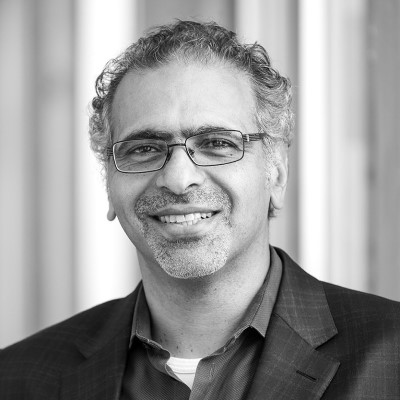
Dr. Khaled El Emam is the Canada Research Chair (Tier 1) in Medical AI at the University of Ottawa and a Professor in the School of Epidemiology and Public Health. He is a Senior Scientist at the CHEO Research Institute and Director of the Electronic Health Information Laboratory, focusing on privacy-enhancing technologies like synthetic data generation. He also serves as Scholar-in-Residence at Ontario's IPC. Khaled has co-founded six data-focused companies, held senior roles at the National Research Council of Canada, and was head of the Quantitative Methods Group at Fraunhofer Institute. He participates in various advisory committees and is co-editor-in-chief of JMIR AI. He was previously ranked as the top systems and software engineering scholar worldwide by the Journal of Systems and Software.

Co-Founder and CEO
Private AI

Patricia Thaine is the Co-Founder & CEO of Private AI, a Microsoft-backed startup who raised their Series A led by the BDC. Private AI won the Privacy Innovation Award at PICCASO 2024, was named a 2023 Technology Pioneer by the World Economic Forum as well as a Gartner Cool Vendor. Patricia was on Maclean’s magazine Power List 2024 for being one of the top 100 Canadians shaping the country. She is also a Computer Science PhD Candidate at the University of Toronto (on leave) and a Vector Institute alumna. Her R&D work is focused on privacy-preserving natural language processing, with a focus on applied cryptography and re-identification risk. She also does research on computational methods for lost language decipherment. Patricia is a recipient of the NSERC Postgraduate Scholarship, the RBC Graduate Fellowship, the Beatrice “Trixie” Worsley Graduate Scholarship in Computer Science, and the Ontario Graduate Scholarship. She is the co-inventor of one U.S. patent and has ten years of research and software development experience, including at the McGill Language Development Lab, the University of Toronto’s Computational Linguistics Lab, the University of Toronto’s Department of Linguistics, and the Public Health Agency of Canada.

Production Partner

Private AI

Private AI’s de-identification solution accurately identifies, anonymizes, and replaces 50+ entities of personally identifiable information (PII) so you can protect your customer data, unlock valuable insights, and comply with global privacy regulations like the GDPR, CPRA, HIPAA, and more. We deploy on-premise, or in any cloud, and support 10+ file types including text, PDFs, images, and audio.

Additional Content From Scientist.com

Related Content