Accurate, affordable clinical risk evaluation at human exposure levels is long overdue. Learn about Axiom's new clinical risk assessment model which is more accurate, 20X cheaper, and more interpretable than advanced 3D spheroids.
Toxicity remains one of the leading causes of drug candidate failures in both preclinical and clinical stages, costing the industry billions of dollars each year. Historically, scientists have struggled to find robust, accurate, and cost-effective ways to predict toxicity risk at clinically relevant exposures.
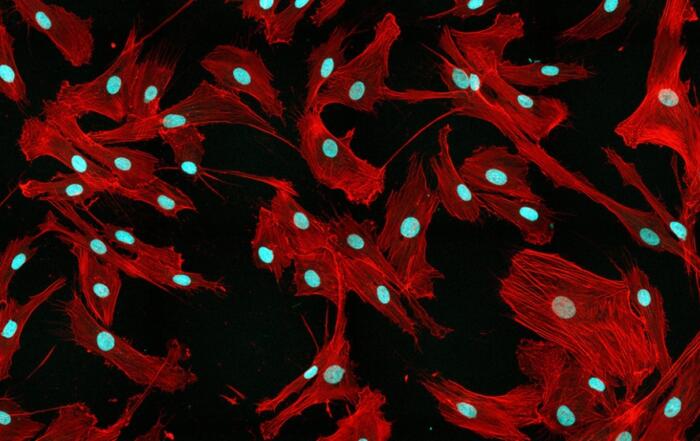
In this presentation, Axiom will emphasize the growing need for improved clinical risk assessment and show how AI/ML techniques can deliver more precise toxicity predictions. Our focus is on drug-induced liver injury (DILI)—a major contributor to late-stage failures. We address it by training models on a dataset of over 100,000 compounds tested in primary human liver cells and profiled across multiple high-content imaging assays. These data are then integrated with adverse event outcomes from thousands of clinical trials to refine risk predictions at human exposure levels. The result is a clinical risk assessment model which is more accurate, 20X cheaper, and more interpretable than advanced 3D spheroids. By combining extensive biological and clinical evidence, our DILI risk models deliver more accurate and cheaper toxicity assessments, empowering scientists to make better-informed decisions and ultimately bring safer drugs to market.
Key Topics Include:
- Understand how advanced modeling techniques, combined with extensive biological and clinical data, can yield more accurate clinical risk assessments.
- Learn best practices for setting and exceeding industry standards when validating new toxicity prediction models.
- Discover practical strategies for embedding AI/ML solutions into preclinical workflows while optimizing both resources and outcomes.
- See how Axiom is equipping scientists with the most affordable and accurate preclinical toxicity models.
Production Partner
AxiomBio, Inc.