The FGSL aims to form collaborations to advance our understanding of development and disease mechanism through functional interrogation of the genome at scale.
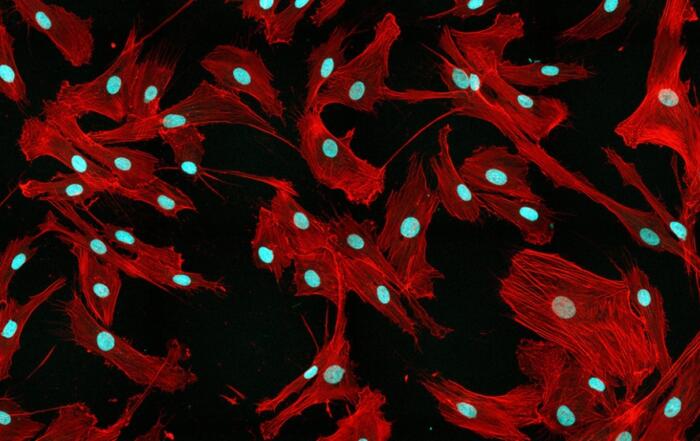
The MRC-AstraZeneca-University of Cambridge Joint Functional Genomics Screening Laboratory (FGSL) leverages the unique features of arrayed screening, whereby individual genes are edited via CRISPR in plate-based format, to uncover the complexity of developmental and disease signatures using human cellular models. To do this, the laboratory – hosted at the Milner Therapeutics Institute, University of Cambridge – is equipped with a high-throughput screening platform to enable functional endpoint acquisition including high content imaging and flow cytometry.
In this presentation, Dr. Ulrike Künzel and Dr. Chun Hao Wong showcase previous phenotypic screens in complex cell models, in which they overcame some of the inherent challenges in delivering CRISPR/Cas9 reagents, for example, through high throughput nucleofection. They also present routes to form either academic or small/medium-sized enterprise collaborations with the FGSL for arrayed screening.
Key Topics Include:
- CRISPR screening as an unbiased approach to identify new targets for hypothesis generation.
- Arrayed format facilitates dissection of complex phenotypes.
- Non-viral delivery of CRISPR/Cas9 reagents such as through nucleofection enables arrayed screening in primary cells.
Presenters

FGSL Lead
AstraZeneca

FGSL Lead
Milner Therapeutics Institute
University of Cambridge
Production Partner
Lonza Bioscience