
Join Josiane Broussard, PhD as she explains the links between sleep, circadian disruption, cardiovascular function, and metabolic health.
Josiane presents an overview and background on this topic before diving into 2-3 recent studies on the effects of sleep and sleep disruption on insulin resistance, metabolism, and health. She concludes with potential countermeasures when sleep and circadian disruption are unavoidable.
Key Topics Include:
- There is a link between sleep and health
- Not getting enough sleep or sleeping at the wrong time increases the risk for many diseases
- Prioritizing sleep duration and quality should be a focus to promote optimal health
Click to watch the webinar recording. To view the presentation full screen simply click the square icon located in the bottom-right corner of the video-viewer.
Presenters
Associate Professor
Health and Exercise Science
Colorado State University
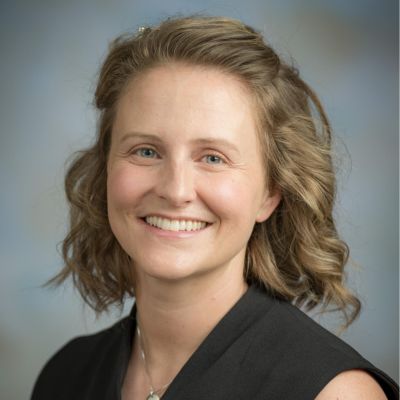
Dr. Josiane Broussard is a clinical and translational scientist interested in sleep and circadian rhythms and metabolic health. She is an Associate Professor in the Department of Health and Exercise Science at Colorado State University and in the Division of Endocrinology, Metabolism and Diabetes and the University of Colorado Anschutz Medical Campus.
Additional Content From American Physiological Society
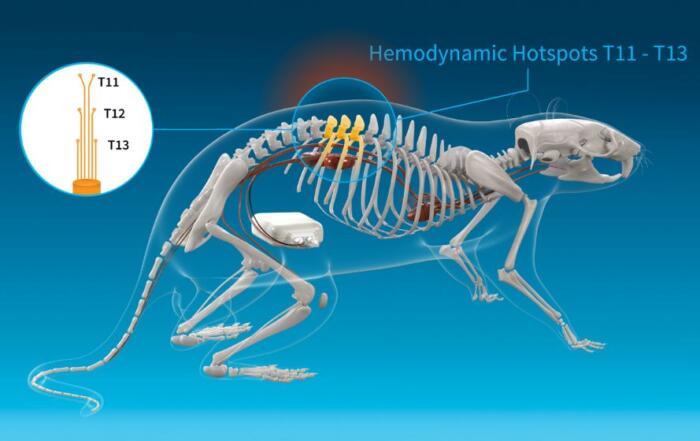
Engineering Neuromodulation for Cardiovascular Instability
Dr. Aaron Phillips traces the translational journey of a discovery that began in a foundational laboratory and is now advancing through pivotal clinical trials aimed at stabilizing cardiovascular function.
Skeletal Muscle Circadian Clocks: Keeping Time for Systemic Health
Dr. Karyn Esser presents the critical role of skeletal muscle circadian clocks in maintaining muscle strength, metabolic health, and systemic adaptations to endurance exercise.
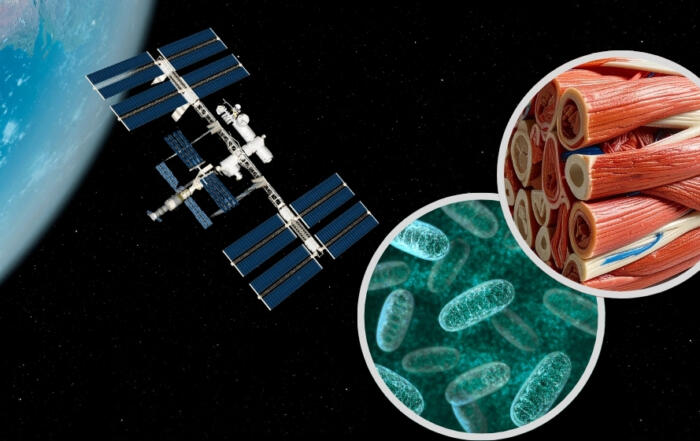
Redox Regulation of Skeletal Muscle: A Journey from Liverpool to the International Space Station
Dr. Anne McArdle and Dr. Malcolm Jackson explore groundbreaking research from the Muscle Laboratories at the University of Liverpool. They examine how redox regulation influences the adaptive responses of skeletal muscle during physical activity and how these processes evolve with age.
Additional Content From Society for Neuroscience
Updates in Chronic Traumatic Encephalopathy (CTE)
Dr. Ann McKee will describe the emergence of chronic traumatic encephalopathy (CTE) as a distinct disease over the past 20 years.
Organoid Meets Microelectrode Array (MEA) – Accelerating Drug Discovery and Development
In this webinar, Dr. Sven Schönecker and Sara Mirsadeghi, MSc, will discuss 3D Mesh Microelectrode Arrays (MEA) including new developments and applications.
Compensatory Mechanisms in Parkinson’s Disease
Bas Bloem, MD reviews compensatory mechanisms, including cerebral plasticity and behavioral adaptation, in persons with Parkinson's disease.
Additional Content From Federation of European Neuroscience Societies
Measuring Neuronal Activity and Vascular Physiology in the Human Brain Using High-Resolution Functional Magnetic Resonance Imaging
Join Jonathan Polimeni, PhD for a deep dive into the physics and physiology of fMRI.
Cellular Brain Repair for Parkinson’s Disease: Is the Answer in the (Biomaterial) Matrix?
Hear Eilís Dowd, PhD highlight her lab's recent data demonstrating that dopaminergic cell replacement in the Parkinsonian rodent brain, using both fetal and induced stem cell-derived cells, is enhanced when the cells are transplanted in a neurotrophin-enriched collagen hydrogel.
Unveiling the Primate Brain: Advanced Insights through Ultra-Dense Electrophysiology
In this webinar, Drs. Kari Hoffman, André Bastos, and Thilo Womelsdorf present their research on the neurophysiological basis of learning, cognition, and sensory processing, including attention and connectivity between brain regions in non-human primates.
Additional Content From American Autonomic Society
Systemic and Intraspinal Pathology and Repair After Spinal Cord Injury in Rodents
Join Dana McTigue for a deep dive into her work studying spinal cord injury in rodents and its resulting pathological features in lower organs.
From Models to Heartbeats: Computational Design of Vagus Nerve Stimulation for Cardiac Health
This webinar explores closed-loop cardiac rhythm control restoration in heart-transplant patients from model development to in silico regulatory evidence for safety and efficacy trials.
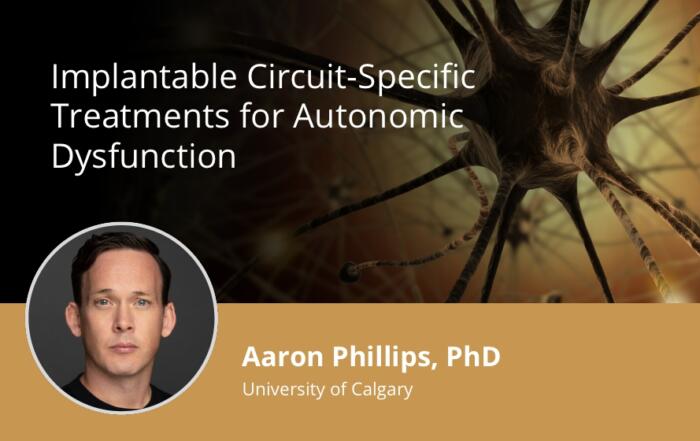
Implantable Circuit-Specific Treatments for Autonomic Dysfunction
In this webinar, Dr. Aaron Phillips presents his research on the neural mechanisms of hemodynamic stability.
Additional Content From Scientist.com
How to Avoid Expensive Redesign Cycles in Antibody Discovery
Learn how integrated antibody discovery and engineering strategies can accelerate the path from hit to optimized lead in less than 12 months while minimizing costly redesign cycles.
Beyond Exposure: Integrating PK/PD for Translational Predictive Power
Learn to integrate PK/PD modeling and strategic biomarkers to bridge the translational gap. Improve clinical predictability for NCEs, ADCs, and large molecules in this technical webinar.
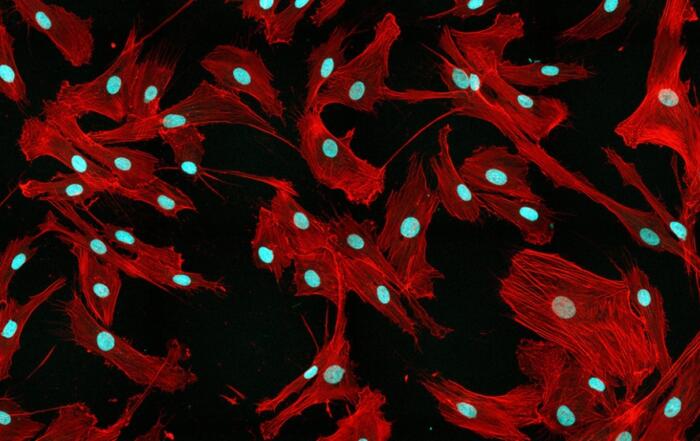
Advancing the Manufacture of Mesenchymal Stromal Cells and Derived Extracellular Vesicles in Stirred-Tank Bioreactors Through Enhanced Bioprocess Control
Learn how to scale the production of MSCs and extracellular vesicles using bioreactor control and real-time monitoring for more consistent therapies.