
Q&A Report: Clambake: An Algorithm to Decode Energy Expenditure Data from Metabolic Cages
The answers to these questions have been provided by:
Jonathan Brestoff, MD, PhD, MPH
Associate Professor
Department of Pathology and Immunology
Washington University School of Medicine
Any thoughts on using high-fat diets vs. chow diets and how that affects EE data interpretation?
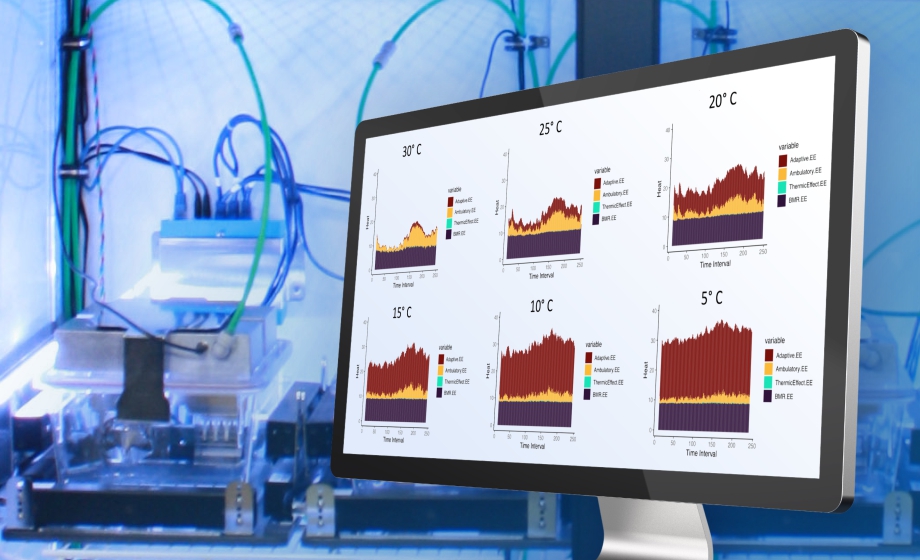
Yes, we have compared low fat diet (LFD, 10% kcal fat) vs high fat diet (HFD, 60% kcal fat) in which the LFD access is removed and then replaced with 60% kcal fat in the same mice. Within 1 hour, this dietary change leads to an increase in the Adaptive Thermogenesis component of total Energy Expenditure (EE), which is consistent with prior reports indicating that BAT thermogenesis is activated from acute HFD feeding (PMID: 19187776). We feel this “diet-induced thermogenesis” (DIT) is distinct from the Thermic Effect of Food (TEF). The TEF is the energetic cost of absorbing and catabolizing macronutrients to produce ATP and is closely related to the protein content of the food (more protein leads to a higher TEF, less protein leads to lower TEF, PMID: 23666976), whereas DIT is a thermogenic response elicited by supplying thermogenic cells such as brown adipocytes with lots of fatty acids that are then burned to produce heat. The protein contents of the 10% and 60% kcal fat diets are identical (10%). We feel the acute increase in HFD-induced TEF is likely accurately assigned to the Adaptive Thermogenesis component of Clambake. TEF did not differ between groups, likely reflecting that protein content was the same between the 2 diets. One could argue that DIT is just a subcomponent of TEF and that this HFD-induced increase in AT should be assigned to TEF. However, arguing against this is that doing so would dramatically over-estimate TEF outside of physiological estimates of ~7%.
Using the CLAMs machine, assessing animal welfare daily, what is the longest duration animals can remain within the CLAMs machine with specific focus upon RERs? We now have long-acting metabolic agents that exert physiological effect for greater than 7 days.
We have completed experiments out to 7 days using Clambake but it should work for longer durations too. We do recommend measuring body composition periodically or at least before and after CLAMS cage analyses to verify that any gradual changes in Basal Metabolic Rate (BMR) are explained by changes body mass or lean mass.
Is it mandatory to generate the data using CLAMS, or would other systems be ok? If so, in what form (eg. csv, expadata files)?
The algorithm is trained on and validated against CLAMS cage data only at this time. It should technically be feasible to use Clambake using any metabolic cage system as long as all the required parameters are measured. However, these systems have different configurations and features than CLAMS cages, so we cannot guarantee functionality with other platforms.
How does Clambake work with other medications?
This will need to be tested in a medication-by-medication basis.
Do you think Clambake can be useful for hypertension research?
If it matters to you how energy expenditure components are altered in the context of hypertension, then yes. I could envision a scenario in which one might want to relate the severity of hypertension to various EE subcomponents – does the severity of hypertension correlate with AT, TEF, AEE, or BMR in your mice? Does the nature of those correlations change in a genotype-, diet-, or drug-dependent manner?
Do you know if Clambake can be used for room-calorimetry clinical set-ups?
No, it cannot at this time. That would require a completely new algorithm trained with data from such a facility and then validated using independent datasets from that facility.
Are there any specifications for formatting of the data?
Yes, the data are fed into Clambake on a subject basis, such that all individual readouts are contained within a single analytic file for each mouse. This is simply a matter of how we built the algorithm, and it could be adapted to use data exported on a parameter basis. When Clambake is released publicly, the export format will not matter, as you’ll hopefully be able to click a button from within CI-Link to run Clambake without any exportation required. You can then export the Clambake results and graphs for publications or additional analyses you may wish to perform in Prism or another statistical analysis software package you prefer.
How does Clambake handle other scenarios like HFD feeding? What about effects of drugs on energy metabolism?
My answer above addresses short-term HFD feeding. Chronic HFD will be tested in future studies. Drug effects need to be assessed individually.
What are the implications for cancer cure-related research?
It really depends on the user’s interests and question at hand. You can use Clambake to look at parameters related cachexia or whole-body metabolism in the context of cancer. I cannot advise on how to interpret the results, and we encourage independent validation of any new models.
Have you performed your analyses separately for light and dark phases?
Yes. That was shown throughout the presentation and in every experiment we showed.
Hi, thank you so much for the fantastic talk. I have a question about the graph you showed on the thermic effects of food. Is the X-axis daily food intake?
In the TEF estimate analyses, those values were food intake on an interval basis, not daily.
Do you need the large variation in ambient temperature? Does 30C vs 10C work as well as a 5C cold stress?
No, this is not required. It is simply a convenient way for us to demonstrate Clambake performance across a range of physiologic contexts and to validate its performance using new environmental conditions that were not used to train Clambake. We recommend performing 24h of measurements spanning a full light:dark cycle. We have not tested yet whether one can perform Clambake analyses on short spot-measurements (e.g. 4 hours), but we do not recommend doing that unless its biologically required.
Do you have any experience with comparisons of aging?
Yes, we have compared Young vs Old (2-years-old) mice. That analysis is pending.
Is Clambake available to all researchers and at what price?
This a question for Columbus Instruments. It will not be sold separately and will be a feature of CI-Link software linked CLAMS Cages.
This is really exciting. How quick can we use this? I have data I would like to analyze for publication.
The analyses themselves currently take us about 1 day to set up and run, but that is because all data transfers and code execution are manual currently. When Clambake is deployed within the Columbus Instruments CI-Link ecosystem, we expect running Clambake will take no more than 1-2 hrs, though it will depend on the number of files, the duration of the experiment, and computer specifications.
Where can I access the Clambake software and try my dataset?
Please speak with Chris Adams at Columbus Instruments.
How were the animals housed, for example were males and females combined? Any behavioral analysis or other phenotypes?
They were co-housed with 3-5 mice per cage up until going into the CLAMS cages. At that time, they were single housed (one per cage) as that is required for metabolic cage systems to provide animal-level data. They were acclimated for ~1 day prior to the analyses we showed. Males and females were not combined.
I used the bottom food cage Oxymax system and had the problem that mice either slept on the feeder or removed food without eating. How do you deal with big fluctuations in "food intake"?
Clambake may not work with a bottom feeder as it was not trained this way. We used a hanging feeder. The mice could hang from the feeder or exert stable force on the feeder that gets recorded. Those forces are much larger than the amount of food consumed in a feeding bout, so they are easily filtered. In our experience thus far, Clambake does not see big fluctuations in food intake on an interval basis.
The data you showed at the end - was that normalized?
Some of the data shown at the end were expressed proportionally (percentage of total EE from each partition). All of the data I showed were mass-normalized based on all body composition data, not just body weight or lean mass. The different body composition parameters each have temperature- and sex-dependent relationships with EE, so we feel this is the best method to normalize rather than simply doing ANCOVA adjustments for body mass or lean mass, which misses valuable information.
For the data you presented, which mouse strain was used, and are their expected variations depending on strain?
All of our experiments were performed on C57BL6/J mice, as the vast majority of transgenic mouse strains are on this background. However, we do plan to compare a range of mouse strains in the future. We have sought extramural funding to address this matter.
If the animals are all housed at TN - you reduce the contribution of apative thermongenesis greatly - so then can you more clearly see the contrbutions of food energy?
Our analyses actually show that TEF is dependent on temperature, likely because the mice are using different energy substrates and may be also burning stored calories (e.g. in the cold). Currently, we think some of the TEF data are being assigned to AT because of our thermoneutral studies. We have a specific plan to test whether or not this is the case; if it is the case, we have a strategy in place to correct for this.
Have you looked at the contributions of different diets?
Only 60% kcal fat HFD. Although we plan to interrogate a few more in the future, there are so many different diets available that it’s infeasible to test them all. We recommend to run Clambake analyses on your experimental system and validate the predictions from Clambake using an orthogonal method.
What is the youngest age of mice you used?
I believe the youngest mice we have used thus far with Clambake at 8-weeks-old. It is a good idea for us to look at younger mice as well in future studies.
How long until this is applied to humans?
In order to use Clambake on human data, we would need to train an entirely new version of Clambake using human data and validate it using an independent set of experiments. I can see some value there, however most people can control their behavior (e.g. rest or move on command to follow a protocol) and consent to experimental conditions such as cold exposure or consumption of different diets. Therefore, it is possible to directly estimate TEF, AEE, and BMR in humans already, and maybe even AT induction capacity in response to a thermogenic stimulus. This requires work and well-designed protocols to estimates those parameters, but it is possible with human subjects. In my opinion, the need for Clambake is much higher in rodent models where the animals move freely, cannot alter behavior in response to simple commands, and cannot follow an experimental protocol designed to measure components to EE.