Join our webinar to see how early synaptic dysfunction can be captured with long-term organoid electrophysiology using Mesh MEA.
Prion diseases are fatal neurodegenerative disorders marked by progressive synaptic dysfunction long before widespread neuronal loss becomes evident. Using both mouse models and human brain organoids, researchers are uncovering how prion replication disrupts synaptic transmission and connectivity at the earliest stages of disease, often well before significant prion accumulation or clinical symptoms appear.
In this webinar, we explore how these models reveal early synaptic deficits in both infectious and genetic prion disease, including during the prodromal phase. We’ll also discuss why capturing these gradual, long-term changes requires electrophysiological approaches and technologies like Mesh MEA that are capable of monitoring neuronal activity over extended timeframes, providing critical insights into disease progression and new opportunities for early detection.
Key Topics Include:
- Early synaptic dysfunction is a shared hallmark of prion disease across mouse and human models.
- Disease-associated prion protein mutations drive early synaptic abnormalities in inherited prion disorders.
-
Advanced electrophysiology technology, like Mesh MEA, helps track synaptic damage and understand prion neurodegeneration mechanisms.
Presenters

Research Fellow,
Laboratory of Neurological Infections and Immunity | NIAID
National Institutes of Health (NIH)
Simote Foliaki completed his undergraduate studies at The University of Hawaii and earned his PhD from The University of Melbourne, Australia. His research focuses on the pathogenesis of neurodegenerative diseases, with particular emphasis on proteinopathies and prion diseases.
Production Partner
Harvard Bioscience, Inc.
Harvard Bioscience is a global leader in the manufacturing and distribution of solutions to advance life science research. For over 110 years, we have served the changing needs of life scientists in over 100 countries. Our expanding portfolio of brands include instruments for organ and animal research, cell analysis, molecular biology, fluidics, and laboratory consumables.

Additional Content From Harvard Bioscience, Inc.
Mapping Heterogeneous Interfaces Using Single-Entity Electrochemical Microspectroscopy
Dr. Venky Prabhakaran describes the development of scanning electrochemical microspectroscopy and its application to characterize heterogeneous electrified interfaces.
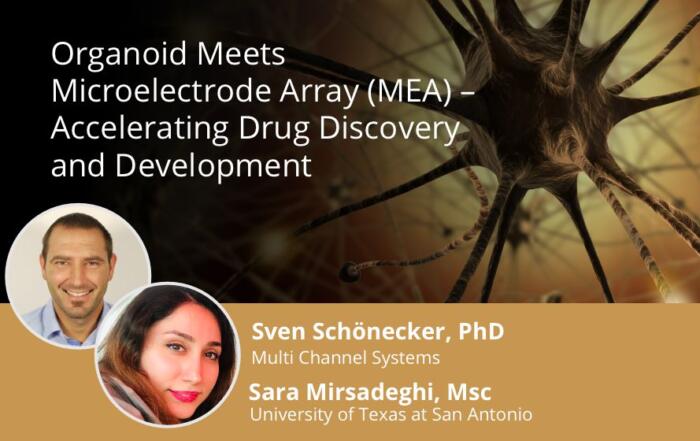
Organoid Meets Microelectrode Array (MEA) – Accelerating Drug Discovery and Development
In this webinar, Dr. Sven Schönecker and Sara Mirsadeghi, MSc, will discuss 3D Mesh Microelectrode Arrays (MEA) including new developments and applications.
Molecule Transport across Cell Membranes: Electrochemical Quantification at the Microscale
In this webinar, Dr. Sabine Kuss discusses the importance of transmembrane molecule exchange and how to detect and quantify membrane transport of molecules in cells.
Related Content

Seeing White Matter Aging Through the Visual System
Dr. Janos Groh from the Technical University of Munich explores how the visual system can be used to uncover the cellular, molecular, and neuroinflammatory mechanisms driving white matter aging.
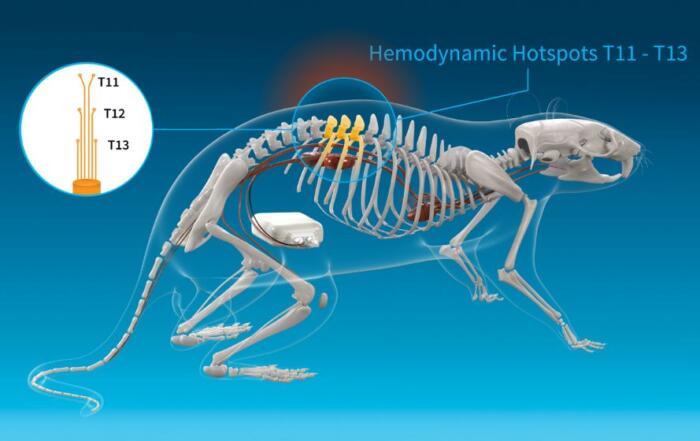
Engineering Neuromodulation for Cardiovascular Instability
Dr. Aaron Phillips traces the translational journey of a discovery that began in a foundational laboratory and is now advancing through pivotal clinical trials aimed at stabilizing cardiovascular function.