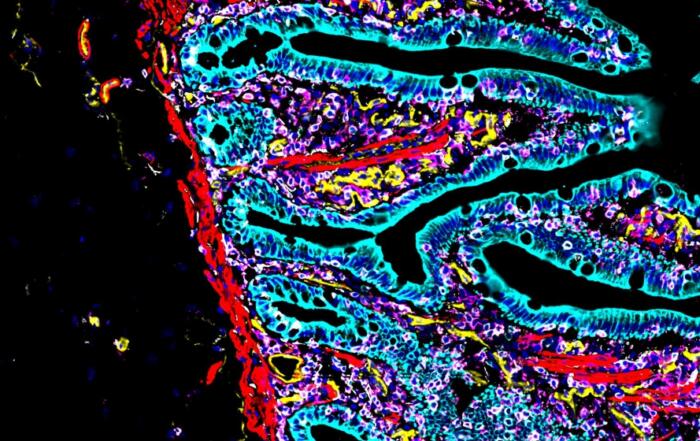
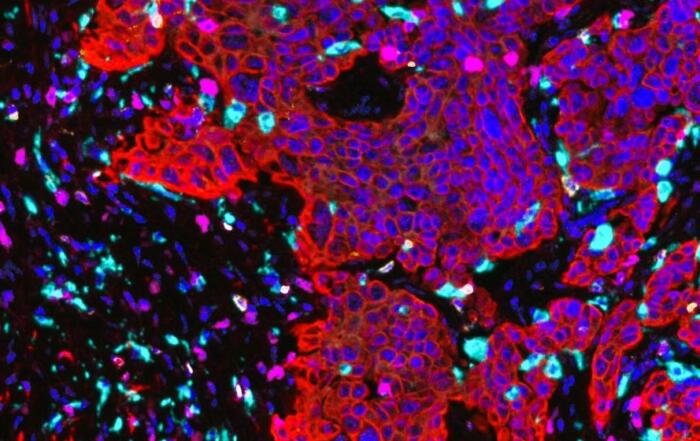
Explore immunotherapy resistance in melanoma with Dr. Camelia Quek through advanced spatial multiomics and single-cell analysis insights.

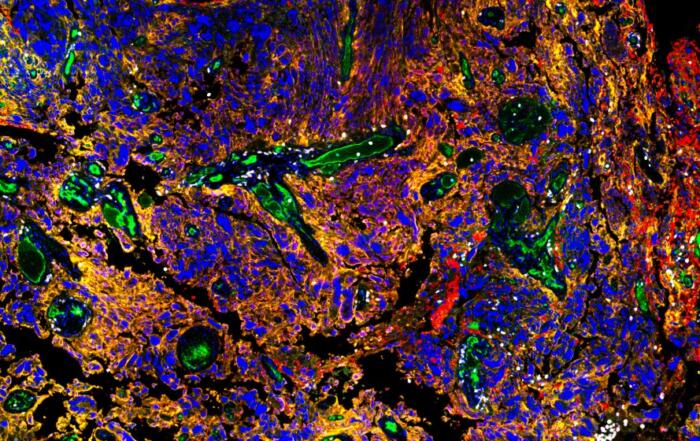
Heterogeneous resistance to immunotherapy remains a significant challenge in cancer treatment, driven by intrinsic genetic traits of the tumor and extrinsic factors within the tumor microenvironment (TME). Join us for an insightful webinar, where Dr. Camelia Quek presents on the innovative use of longitudinal multimodal single-cell analysis and spatial inference to uncover the complexities of the tumor microenvironment (TME) of advanced melanoma patients with innate resistance, acquired resistance, or response to immunotherapy.

Key Topics Include:

  1. Integration of single-cell sequencing and spatial datasets to understand the biological insights of innate and acquired resistance to immunotherapy
  2. The identification of immune-striving phenotypes and the emergence of specific melanoma subclones post-therapy
  3. The role of B cell signatures and lymphoid aggregates in therapeutic outcomes
  4. Immune hotspot in melanoma patients treated with neoadjuvant immunotherapy

Attendees will gain a deeper understanding of how these discoveries can inform future therapeutic strategies and improve patient outcomes.

Click to watch the webinar recording. To view the presentation full screen simply click the square icon located in the bottom-right corner of the video-viewer.

Presenters

CINSW Research Fellow and Honorary Senior Research Fellow
Melanoma Institute Australia and University of Sydney

Dr. Camelia Quek is a CINSW Research Fellow at Melanoma Institute Australia and is appointed as an Honorary Senior Research Fellow at the University of Sydney. Dr Quek has training in both molecular biology and bioinformatics, where she originally did a first degree in molecular biology at the University of New South Wales before moving on to do a PhD in Neuroscience and Computational Biology at the University of Melbourne. Dr Quek has extensive experience in integrating cutting-edge techniques and sophisticated computation methods to solve clinically important questions that associate with strong clinical implementations. She is currently leading the Translational Bioinformatics and Data Analytics Program for cancer therapy studies that resulted in several key publications (e.g. Cancer Cell and Nature Publishing Group Journals) in identifying molecular determinants of response and resistance in patients with advanced melanoma treated with targeted and immune-based therapies. In 2017, she was part of the Melanoma Institute Australia research team that won the CINSW Premier’s Awards for Outstanding Cancer Research. In 2022, she was awarded the prestigious CINSW Wildfire Highly Cited Publication Award for her co-first author paper published in Cancer Cell. Her current research interests are: (1) Biomarkers of response and resistance to cancer therapies, (2) Single-cell multi-omics to understand treatment and progression, and (3) Spatial imaging to dissect key cellular interactions and novel drug targets.

Production Partner

Akoya Biosciences
As The Spatial Biology Company®, Akoya Biosciences’ mission is to bring context to the world of biology and human health through the power of spatial phenotyping. The company offers comprehensive single-cell imaging solutions that allow researchers to phenotype cells with spatial context and visualize how they organize and interact to influence disease progression and response to therapy. Akoya offers a full continuum of spatial phenotyping solutions to serve the diverse needs of researchers across discovery, translational and clinical research: PhenoCode™ Panels and PhenoCycler® Fusion, PhenoImager® Fusion, and PhenoImager HT Instruments.

Additional Content From Akoya Biosciences

Additional Content From Scientist.com

Related Content