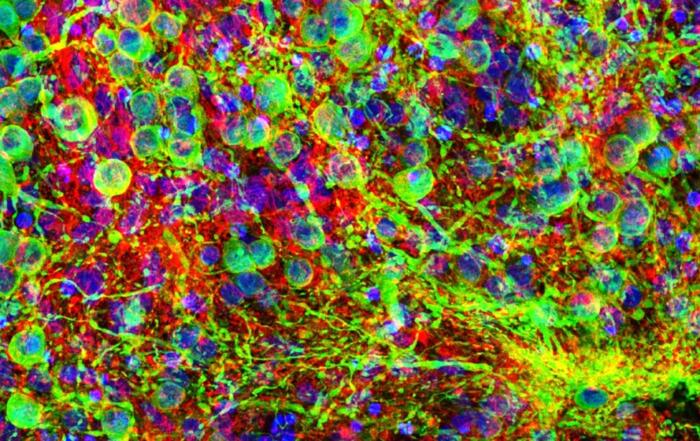
Join us to learn how recent discoveries about the brain tumor microenvironment can drive new therapeutic strategies to overcome tumor immunosuppression.

Achieving effective and sustainable anti-tumor immunity remains a significant challenge in cancer therapy, largely due to tumor immunosuppression. This is particularly pronounced in brain tumors, which create one of the most immunosuppressive tumor microenvironments. A key player in this process are macrophages, which can shift between a pro-inflammatory M1-like state and a pro-tumor M2-like state, contributing to the suppression of immune responses.

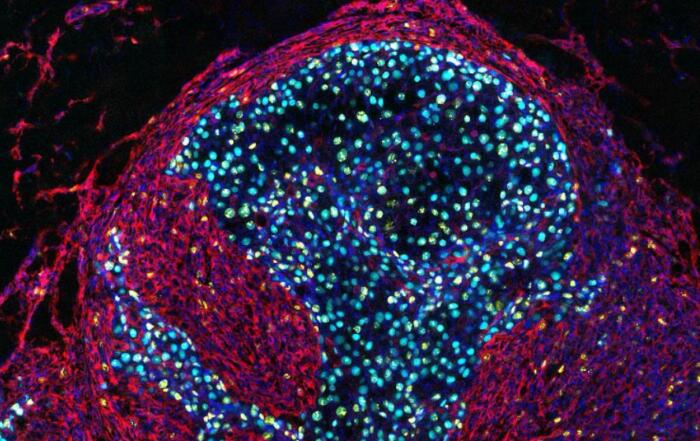
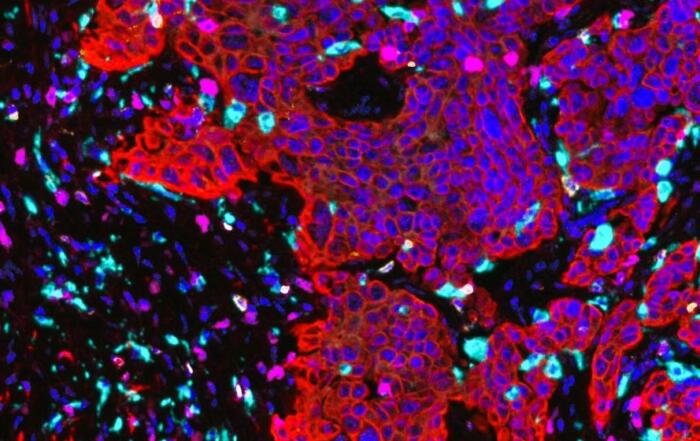
In this webinar, we present the latest research on reprogramming the brain tumor microenvironment to enhance anti-tumor immunity. Using advanced spatial tissue analysis combined with in vitro experiments, we will delve into the mechanisms regulating macrophage-dependent tumor immunosuppression in brain cancer. Our findings reveal that the spatial localization of macrophages within the tumor microenvironment influences their functional state, and that pathological tissue remodeling within perivascular niches impacts the activity of tumor-infiltrating lymphocytes.

Key Topics Include:

  • Impact of the brain tumor microenvironment on immune cells
  • The role of macrophages in tumor immunosuppression
  • How tissue remodeling could enhance anti-tumor immunity in brain cancer
Click to watch the webinar recording. To view the presentation full screen simply click the square icon located in the bottom-right corner of the video-viewer.

Resources

Presenters

Associate Professor and Laboratory Head
Doherty Institute Department of Microbiology and Immunology
The University of Melbourne

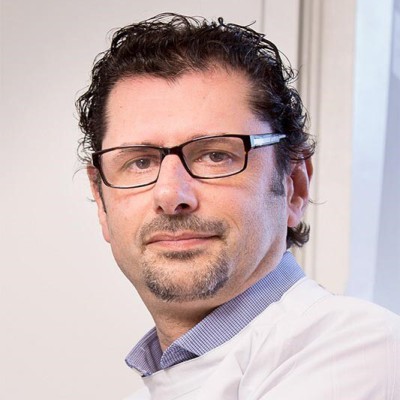
Theo is head of the Brain Cancer Biology & Tumour Microenvironment Laboratory, at The University of Melbourne. He completed his PhD at the Ludwig Institute for Cancer Research, then moved to the German Cancer Research Centre, Heidelberg, as a postdoctoral researcher where he generated various conditional mutant and Cre-recombinase transgenic mice targeting several regions in the brain. He then joined Rob Ramsay's laboratory at the Peter MacCallum Cancer, where he was the first to demonstrate that MYB has a critical role in brain development. He was a research academic for 3 years at Monash UniCam MIPS before undertaking a Marie Curie Fellowship for 3 years as a part of European Union Greek-German research program, at the University of Patras in Greece. In 2011 he returned to Melbourne and has been head of the Brain Cancer Biology & Tumour Microenvironment Laboratory since. Using cutting edge technology, his research aims to understand how CREB regulates brain tumour growth, and through the development of novel mouse brain tumour models, his laboratory has shown that the PI3K-CREB signalling-transcription axis regulates brain tumour cell proliferation and differentiation, and that targeting CREB attenuates malignancy. More recently, his laboratory has focussed on spatial mapping of the brain tumour microenvironment, investigating tumour remodelling and cell signalling heterogeneity.

Production Partner

Akoya Biosciences
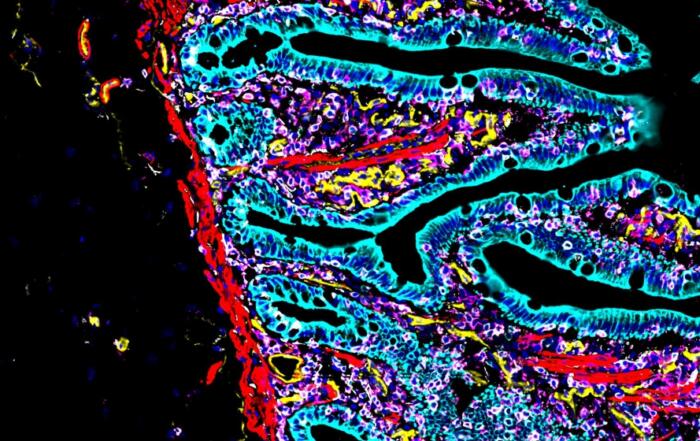
As The Spatial Biology Company®, Akoya Biosciences’ mission is to bring context to the world of biology and human health through the power of spatial phenotyping. The company offers comprehensive single-cell imaging solutions that allow researchers to phenotype cells with spatial context and visualize how they organize and interact to influence disease progression and response to therapy. Akoya offers a full continuum of spatial phenotyping solutions to serve the diverse needs of researchers across discovery, translational and clinical research: PhenoCode™ Panels and PhenoCycler® Fusion, PhenoImager® Fusion, and PhenoImager HT Instruments.

Additional Content From Akoya Biosciences

Additional Content From Scientist.com

Related Content