Science News, Content, and Resources
Science News

Protocol Preview: Long-read sequencing, Nature’s Method of the Year
Nature Methods declared "Long-Read Sequencing" their Method of the Year for 2022, but what exactly makes this technique worthy of such a title?
Talking Real Science with Yelena Akelina
This episode of Share Science features Yelena Akelina, DVM, MS, a Research Scientist and a Co-Director/Instructor in Clinical Microsurgery at the Microsurgery Research and Training lab at the Department of Orthopaedic Surgery, Columbia University.
The Blues & the Browns: Links between Depression and Gut Microbiota
Recently, Radjabzadeh et al., identified 13 genera of gut microbiota that have been implicated with symptoms of depression.

Brain-Derived Tau in Blood: the Future of Alzheimer’s Disease Diagnosis?
Recently published in Brain, Gonzalez-Ortiz et al. report the design and development of a novel blood-based biomarker specific to brain-derived tau. In this blog post, we dive into the advantages of their novel immunoassay over those that are commercially available, as well as its future implications for Alzheimer’s disease diagnosis.

Meet Rajesh Chaudhary, Cardiovascular Transplant Researcher and Rodent Microvascular Surgery Scholarship Recipient
Rajesh Chaudhary, PhD, recently won a Kent Scientific scholarship for the Comprehensive Training Program for Rodent Microvascular Surgery at Columbia University! We interviewed Rajesh to learn why he applied to this scholarship and what he skills he gained from this course.

Meet Saran Lotfollahzadeh, Vascular Surgeon and Rodent Microvascular Surgery Scholarship Recipient
Saran Lotfollahzadeh, MD, recently won a Kent Scientific scholarship for the Comprehensive Training Program for Rodent Microvascular Surgery at Columbia University! We sat down with Saran to learn why she applied to this scholarship, what skills she gained from the course, and more.

Protocol Preview: In Vivo Gene Therapy Using Peptide-Based Delivery
Although gene therapy has been in discussion for decades, its translation to clinical practice has been a slow and challenging process. As a solution to this translational challenge, Allen et al. have proposed a peptide-based delivery method of Cre recombinase for in vivo gene therapy, which we review in this blog post.

Industry Insights with Crown Bioscience: Targeting T Cells Within the Cancer-Immunity Cycle
In this episode of Industry Insights, Saskia De Man, PhD, Marrit Putker, PhD, and Pirouz Daftarian, PhD, from Crown Bioscience discuss assays and methods for evaluating T cell therapeutics, including organoids, co-cultures, and high content imaging.

Novel Targets for Alzheimer’s Disease Treatment: Medin and PLD3
Given that Alzheimer's disease is multifactorial and heterogenous, drug development progress is more likely to occur if multiple pathways are considered. Two recent Nature publications have potentially identified medin and PLD3 as new targets for Alzheimer’s disease treatment, which we summarize in this mini-review.
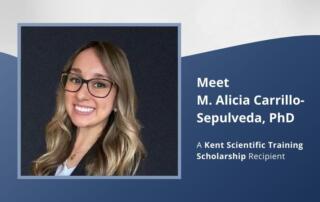
Meet Alicia Carrillo-Sepulveda, Vascular Physiologist and Rodent Microvascular Surgery Scholarship Recipient
Alicia Carrillo-Sepulveda, PhD, recently won a Kent Scientific scholarship for the Comprehensive Training Program for Rodent Microvascular Surgery at Columbia University! We sat down with Alicia to learn why she applied to this scholarship, what skills she gained from the course, and more.

A Novel Ingestible Biosensor for Intestinal Metabolite Monitoring
De la Paz et al. have developed an ingestible, self-powered, and wireless biosensing capsule that can hopefully be used for the noninvasive diagnosis of gastrointestinal disorders in the future. Recently published in Nature Communications, the authors demonstrated how its real-time performance in a porcine model, which we summarize in this post.
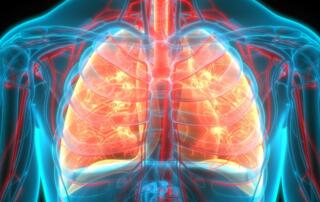
Particulate Matter from Firearms: Lung Toxicity and Respiratory Effects
While health and safety precautions are rightly focused on preventing shooting-related injury and death at firing ranges, heavy metal exposure also poses substantial health risks. Kim et al. recently modeled the acute health effects of particulate matter inhalation from firearm smoke in mice, which we review in this post.

Protocol Preview: a Ferret Model of Respiratory Inflammation
While rodents have long been used to model many human diseases, their anatomical, physiological, and immunological differences from humans cannot be ignored when modeling respiratory inflammation. Recently, Khoury et al. demonstrated how ferrets can be used to model inflammatory respiratory disease and injury, which we review in this blog post.
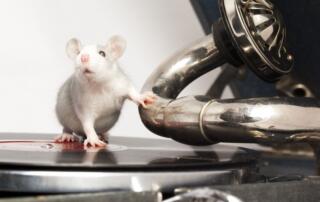
Are They Born This Way? Beat Synchronization in Rats in Response to Lady Gaga, Mozart, and More
Recently, Ito et al. sought to understand beat synchronization in rats and how it compares to humans, which has not been reported to date. In this blog post, we review their findings and how they contribute to our understanding of cross-species beat synchronization.
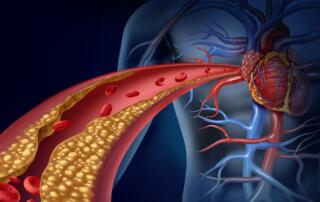
Orphan Receptor GPR55: A New Therapeutic Target for Atherosclerosis?
Since the role of GPR55 in adaptive B cell response regulation has not yet been reported in the context of atherosclerosis, Guillamat-Prats et al. have investigated how GPR55 in B cells affects atherosclerosis development. In this blog post, we highlight the main findings from this study, which was published this month in Nature Cardiovascular Research.